admin

System Architecture of Workforce Scheduling Platforms

System Architecture of Workforce Scheduling Platforms

Disclaimer: This article is strictly informational and does not provide commercial, financial, or operational advice.



Introduction

Workforce scheduling platforms are built on multi-layered system architectures designed to process structured data, apply rule-based logic, and produce coordinated scheduling outputs. These systems are not single-function tools but interconnected environments where data ingestion, processing, and output generation occur in continuous cycles.

In discussions about workforce coordination platforms such as deputy, system architecture is often used as a reference point for understanding how scheduling logic is structured and executed.

This article examines the architectural layers commonly found in workforce scheduling systems, focusing on structural design rather than any specific implementation.


High-Level Architecture Overview

Most workforce scheduling platforms follow a layered architecture model. Each layer has a distinct responsibility and communicates with adjacent layers through structured interfaces.

A typical architecture includes:

  • Data layer
  • Logic (processing) layer
  • Application layer
  • Presentation layer

These layers work together to ensure that scheduling data flows consistently from input to output.


Data Layer Structure

The data layer is responsible for storing and organizing all scheduling-related information. It typically includes structured datasets such as:

  • Employee records
  • Shift definitions
  • Availability schedules
  • Role and skill mappings

This layer is designed to ensure data integrity and consistency across all system operations.

Data normalization is often applied to reduce redundancy and maintain a single source of truth for each entity.


Processing and Logic Layer

The processing layer is where scheduling logic is executed. This layer interprets raw data and applies system rules to generate structured outputs.

Key functions include:

Rule Evaluation

The system evaluates constraints such as availability, role compatibility, and shift coverage requirements.

Relationship Processing

Dependencies between employees, shifts, and roles are analyzed to ensure valid assignments.

Scheduling Computation

The system generates scheduling outputs based on structured logic and predefined rules.

In systems conceptually similar to deputy, this layer represents the core engine responsible for transforming data into actionable schedules.


Application Layer Functions

The application layer acts as an intermediary between system logic and user interaction. It manages how scheduling data is accessed, modified, and updated.

Functions typically include:

  • Schedule generation requests
  • Data update handling
  • Conflict resolution triggers
  • Rule configuration interfaces

This layer ensures that system logic is executed in response to user or system-driven events.


Presentation Layer and Data Visualization

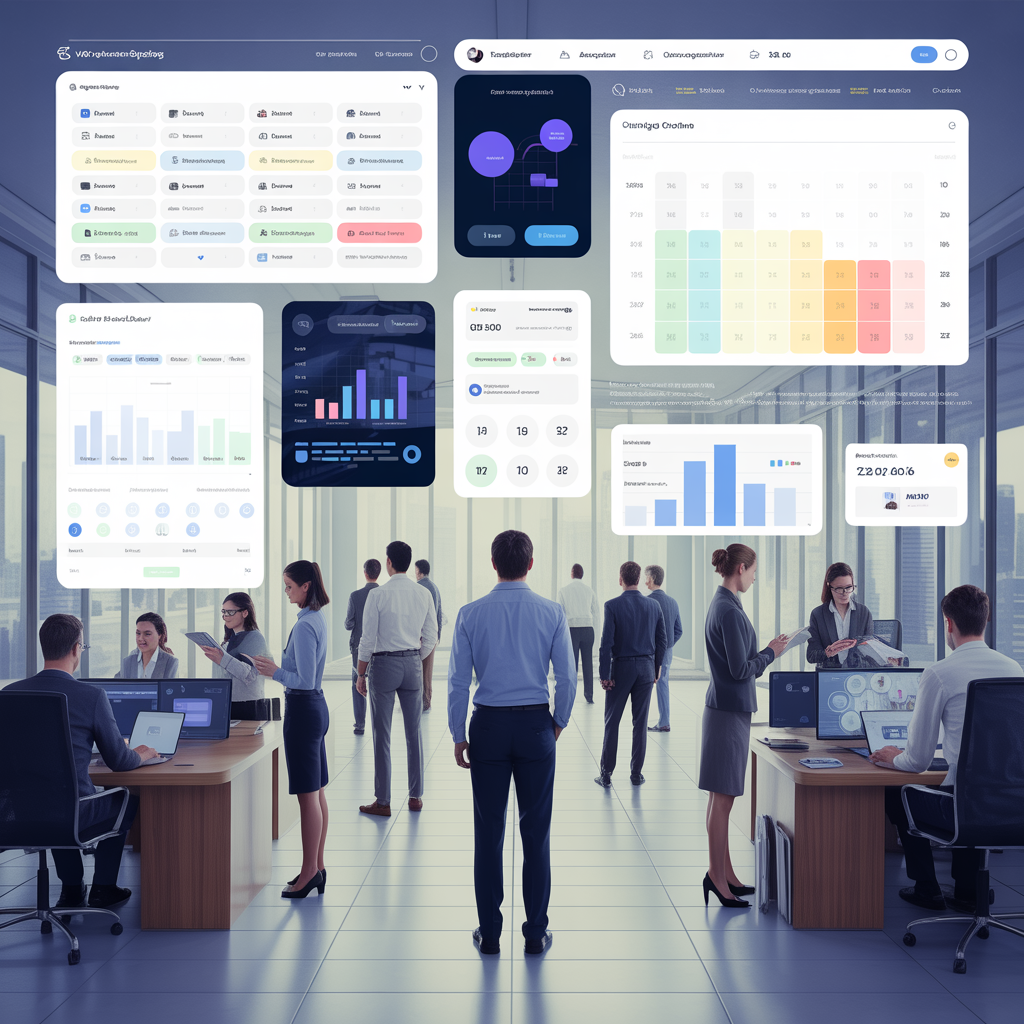
The presentation layer is responsible for displaying scheduling information in a structured and readable format.

Common representations include:

  • Calendar-based views
  • Shift timelines
  • Role-based scheduling grids
  • Availability matrices

The goal of this layer is to translate complex scheduling data into interpretable formats without altering underlying logic.


Communication Between Layers

Workforce scheduling systems rely on structured communication between architectural layers. Data flows in both directions:

  • Downward flow: user input → processing → data storage
  • Upward flow: processed output → visualization

This bidirectional flow ensures that updates are reflected across the system in real time or near real time.


Scalability in System Architecture

Scalability is a key consideration in workforce scheduling platforms. As system usage grows, architecture must support increased data volume and processing complexity.

Common scalability strategies include:

  • Distributed data storage
  • Modular processing components
  • Cached scheduling results
  • Incremental computation models

These strategies help maintain performance consistency under heavy operational load.


Reliability and Consistency Mechanisms

Scheduling systems require high consistency to avoid conflicts and errors. Architectural reliability is maintained through:

  • Transactional data updates
  • Validation checkpoints
  • Redundant data verification
  • Rule enforcement consistency layers

These mechanisms ensure that scheduling outputs remain stable even during frequent updates.


Role of Modular Design

Modular architecture allows scheduling systems to separate functionality into independent components. This improves maintainability and flexibility.

Modules may include:

  • Employee management module
  • Shift scheduling module
  • Rules engine module
  • Reporting module

Each module operates independently while contributing to the overall system behavior.


Integration with External Systems

Workforce scheduling platforms often integrate with external systems such as communication tools, reporting systems, or operational dashboards.

Integration is typically handled through structured APIs or data exchange protocols. This allows scheduling data to be shared without disrupting internal logic.

Platforms like deputy are frequently referenced in conceptual discussions about how scheduling systems interact with broader operational ecosystems.


Limitations of Current Architectures

Despite their structured design, workforce scheduling architectures face several limitations:

  • Complexity in maintaining large-scale modular systems
  • Dependency on accurate and consistent data inputs
  • Challenges in real-time synchronization across distributed components
  • Difficulty adapting to highly unstructured operational scenarios

These limitations highlight the importance of careful architectural design and system governance.


Conclusion

Workforce scheduling platforms are built on layered architectures that separate data storage, processing logic, application handling, and presentation. This structure allows systems to maintain consistency, scalability, and modularity across complex scheduling environments.

Understanding these architectural layers provides insight into how scheduling platforms process information and maintain operational stability across dynamic conditions.


Disclaimer: This article is strictly informational and does not provide commercial, financial, or operational advice.

Posted by admin in Workforce Systems & Scheduling Architecture, 0 comments
Automation Logic in Workforce Scheduling Systems

Automation Logic in Workforce Scheduling Systems

Disclaimer: This article is strictly informational and does not provide commercial, financial, or operational advice.


Introduction

Workforce scheduling systems increasingly rely on automation logic to reduce manual coordination and improve consistency in planning processes. Rather than treating scheduling as a static assignment task, modern systems operate through layered decision rules that continuously evaluate constraints, availability, and operational requirements.

In discussions about digital workforce coordination platforms such as deputy, automation is often described as a central mechanism that supports scalable scheduling workflows.

This article explores how automation logic is structured within workforce scheduling systems, focusing on rule execution, decision layers, and system behavior rather than any specific implementation.


Concept of Automation in Scheduling Systems

Automation in scheduling refers to the use of predefined logic that allows systems to generate or adjust schedules without manual intervention at every step.

This logic is typically built on structured rules that interpret data inputs such as availability, shift requirements, and role assignments.

The goal is not to eliminate human involvement entirely but to reduce repetitive decision-making and ensure consistent application of constraints.


Rule Execution Layers

Automation systems are commonly structured in layered rule execution models. Each layer evaluates a specific category of constraints.

1. Constraint Validation Layer

This layer checks whether scheduling inputs meet basic requirements such as:

  • Time availability alignment
  • Role compatibility
  • Shift coverage requirements

If conditions are not met, the system excludes invalid scheduling options.


2. Priority Resolution Layer

When multiple valid scheduling options exist, the system applies priority rules. These may include:

  • Role hierarchy importance
  • Skill-based preference matching
  • Operational coverage priorities

This layer determines which option is selected when conflicts arise.


3. Conflict Detection Layer

Conflict detection ensures that scheduling outputs do not violate structural rules such as overlapping shifts or exceeding time boundaries.

This layer continuously evaluates potential conflicts during schedule generation and adjustment.


Event-Driven Scheduling Adjustments

Many workforce scheduling systems operate using event-driven logic. This means that changes in data automatically trigger recalculations of affected schedules.

Common triggering events include:

  • Updates in employee availability
  • Shift modifications
  • Role requirement changes
  • Unexpected operational adjustments

When an event occurs, the system re-evaluates relevant scheduling segments rather than rebuilding the entire schedule from scratch.

Platforms such as deputy are often referenced in conceptual discussions of event-driven scheduling behavior due to their structured workflow models.


Automation and Dependency Mapping

Scheduling automation relies heavily on dependency mapping between system entities.

For example:

  • A shift depends on role requirements
  • A role depends on skill matching
  • An assignment depends on availability constraints

These dependencies create a network of relationships that the automation engine evaluates continuously.

This structure ensures that changes in one part of the system propagate logically to related components.


Optimization Logic in Scheduling Systems

Beyond rule enforcement, some systems incorporate optimization logic. This logic aims to produce scheduling outputs that meet defined efficiency criteria.

Optimization parameters may include:

  • Balanced workload distribution
  • Coverage completeness
  • Reduction of idle time gaps
  • Minimization of scheduling conflicts

Optimization does not imply a single “perfect” outcome but rather a selection of the most structurally consistent result under given constraints.


Real-Time Recalculation Mechanisms

Modern scheduling systems often include real-time recalculation capabilities. This allows schedules to update dynamically as new data is introduced.

Instead of relying on batch processing, the system recalculates only affected segments, improving efficiency and responsiveness.

This mechanism is particularly relevant in environments with frequent operational changes.


Limitations of Automation Logic

Despite its advantages, automation logic has structural limitations:

  • Dependence on accurate input data
  • Difficulty handling ambiguous real-world scenarios
  • Constraints defined strictly by system rules
  • Limited contextual interpretation beyond predefined logic

These limitations highlight the importance of maintaining well-structured data inputs and clearly defined scheduling rules.


Role of Automation in System Architecture

Automation logic serves as a coordination layer between raw data and scheduling output. It transforms structured inputs into actionable schedules while maintaining consistency across constraints.

In broader discussions of workforce systems, platforms such as deputy are often used as reference points for understanding how automation layers integrate with scheduling architecture.


Conclusion

Automation logic in workforce scheduling systems is built on layered rule evaluation, dependency mapping, and event-driven recalculation mechanisms. These components work together to transform structured data into consistent scheduling outputs.

Understanding this logic provides insight into how modern scheduling environments maintain stability and responsiveness under changing operational conditions.


Disclaimer: This article is strictly informational and does not provide commercial, financial, or operational advice.

Posted by admin in Workforce Systems & Scheduling Architecture, 0 comments
Data Structures Behind Workforce Scheduling Systems

Data Structures Behind Workforce Scheduling Systems

Disclaimer: This article is strictly informational and does not provide commercial, financial, or operational advice.


Introduction

Workforce scheduling systems rely on structured data models to organize time, roles, and operational constraints into coherent scheduling outputs. These systems are not simply calendar tools; they function as structured environments where multiple layers of information interact simultaneously.

In platforms often referenced in discussions about digital workforce coordination, such as deputy, the underlying logic is built around structured datasets that define how shifts are created, assigned, and adjusted.

This article examines the conceptual data structures that support workforce scheduling systems and how they enable consistent operational planning without focusing on any specific commercial implementation.


Core Data Model Foundations

At the core of any scheduling system lies a structured data model that defines how information is stored and processed. These models typically consist of interconnected entities rather than isolated records.

1. Employee Entity Structure

The employee entity contains essential attributes required for scheduling decisions, such as:

  • Identification parameters
  • Role classifications
  • Availability constraints
  • Skill mappings

These attributes form the baseline for determining suitable shift assignments within the system.


2. Shift Entity Structure

The shift entity represents a defined time block within the scheduling framework. It typically includes:

  • Start and end timestamps
  • Role requirements
  • Location or operational context
  • Capacity constraints

Shifts function as modular units that can be assigned, adjusted, or restructured based on system logic.


3. Availability Dataset

Availability datasets define the temporal boundaries within which scheduling must operate. This data is often collected in recurring cycles and structured into time-based rules.

Key elements include:

  • Preferred working hours
  • Restricted time intervals
  • Recurring availability patterns

These datasets ensure that scheduling outputs remain aligned with real-world constraints.


Relationship Mapping Between Entities

One of the most important aspects of workforce scheduling systems is the relationship mapping between different data entities.

Employees are linked to shifts through assignment rules that consider availability, role compatibility, and operational requirements.

This relationship is not static. It is recalculated whenever underlying data changes, allowing the system to adapt dynamically.

Platforms such as deputy often illustrate this relational structure by connecting users, shifts, and organizational units within a unified system model.


Rule-Based Scheduling Logic

Scheduling systems operate using rule-based logic layers that determine how assignments are generated. These rules may include:

  • Role matching conditions
  • Maximum and minimum working hour constraints
  • Conflict detection rules
  • Priority assignment logic

The system evaluates all rules simultaneously to produce valid scheduling outcomes.

This approach ensures that scheduling decisions remain consistent and predictable under defined conditions.


Data Normalization and Consistency

To maintain system stability, scheduling platforms rely on normalized data structures. Normalization reduces redundancy and ensures that each piece of information exists in a single, consistent format.

For example, employee availability is not duplicated across multiple shift records but referenced centrally. This reduces inconsistencies when updates occur.

Consistency mechanisms are essential in environments where scheduling data changes frequently.


Temporal Data Processing

Time is a fundamental dimension in workforce scheduling systems. Temporal data processing ensures that shifts, availability, and assignments align correctly across time intervals.

Common temporal concepts include:

  • Recurring schedules
  • Overlapping shift detection
  • Time zone normalization
  • Scheduling cycles

These mechanisms allow systems to maintain accurate chronological alignment across operational layers.


System Scalability Considerations

As scheduling systems scale, data complexity increases significantly. Large datasets require efficient processing strategies to maintain performance and responsiveness.

Scalability challenges often include:

  • Increased number of shift combinations
  • Higher frequency of schedule updates
  • Larger employee datasets
  • More complex rule interactions

Structured data modeling helps mitigate these challenges by organizing information into predictable formats.


Role of Structured Systems in Operational Environments

Structured scheduling systems provide a foundation for consistent operational coordination. By organizing data into defined entities and relationships, they reduce ambiguity in decision-making processes.

In broader discussions of workforce systems, tools like deputy are often used as reference points for how structured scheduling logic can be implemented in practice.


Conclusion

The internal structure of workforce scheduling systems is built on interconnected data models that define employees, shifts, and availability as relational entities. These models enable rule-based scheduling logic and ensure consistency across operational environments.

Understanding these structures provides insight into how scheduling systems maintain stability, scalability, and adaptability in complex environments.


Disclaimer: This article is strictly informational and does not provide commercial, financial, or operational advice.

Posted by admin in Workforce Systems & Scheduling Architecture, 0 comments
Workforce Scheduling Systems in Modern Operational Environments

Workforce Scheduling Systems in Modern Operational Environments

Disclaimer: This article is strictly informational and does not provide commercial, financial, or operational advice.


Introduction

Workforce scheduling systems have become an essential part of modern operational environments where coordination, timing, and resource allocation determine overall efficiency. These systems are designed to organize working hours, shift structures, and task distribution across teams operating in dynamic conditions.

The increasing complexity of service-based and industrial environments has led to the adoption of structured scheduling tools that support consistency and visibility. Platforms such as deputy are often referenced in discussions about digital scheduling ecosystems due to their role in structuring shift-based workflows.

This article examines the conceptual foundations of workforce scheduling systems, their structural components, and their role in operational coordination without focusing on specific commercial applications.


Evolution of Workforce Scheduling Systems

Early scheduling methods were primarily manual, relying on spreadsheets, physical boards, or static planning documents. These approaches were sufficient for small teams but became inefficient as organizations scaled and required real-time coordination.

The transition to digital systems introduced centralized scheduling environments where updates could be reflected across teams instantly. This evolution reduced dependency on manual updates and improved alignment between planning and execution.

Modern systems now incorporate layered scheduling logic, enabling adjustments based on availability, role requirements, and operational constraints. The shift toward digitalization also introduced structured terminology, such as shift templates, availability windows, and role-based assignments.


Core Components of Scheduling Systems

Most workforce scheduling systems share several foundational components that define their structure and functionality:

1. Shift Structuring

Shift structuring defines the time blocks assigned to individuals or teams. These structures often follow recurring patterns but can be adjusted based on operational needs.

2. Role Allocation

Role allocation ensures that specific tasks are matched with appropriate skill sets. This reduces inefficiencies caused by mismatched assignments and improves workflow consistency.

3. Availability Mapping

Availability mapping collects and organizes time constraints from individuals within the system. This allows scheduling logic to operate within realistic boundaries.

4. Coordination Layers

Coordination layers manage interactions between multiple schedules, ensuring that overlapping responsibilities are resolved logically.

Systems such as deputy often illustrate how these components can be integrated into a unified interface that supports operational visibility.


Role of Digital Platforms in Scheduling Environments

Digital scheduling platforms serve as structured environments where operational data is organized and maintained. Their primary function is not limited to assigning shifts but extends to maintaining consistency across teams and timeframes.

These platforms typically introduce standardized workflows that reduce ambiguity in scheduling decisions. They also allow for centralized updates, which help maintain alignment across distributed teams.

In broader operational contexts, such systems contribute to reducing fragmentation in communication by consolidating scheduling information into a single structured layer.


Data Handling and Operational Coordination

Workforce scheduling systems rely heavily on structured data inputs. These inputs include time availability, role definitions, and task dependencies. The system processes this information to generate coherent scheduling outputs.

Operational coordination depends on the accuracy and completeness of this data. Incomplete or inconsistent inputs can lead to scheduling conflicts or inefficiencies in execution.

Modern systems often employ rule-based logic to maintain consistency across scheduling cycles. This ensures that constraints are applied uniformly across all scheduling scenarios.


Integration with Broader Operational Workflows

Scheduling systems do not operate in isolation. They are often part of larger operational frameworks that include communication tools, task management systems, and reporting structures.

Integration allows scheduling data to influence related processes, such as task assignment and workload balancing. This interconnected structure supports a more unified operational environment.

In some environments, platforms like deputy are referenced as examples of systems that demonstrate integration between scheduling and operational coordination layers.


Challenges and Limitations

Despite their structured design, workforce scheduling systems face several limitations:

  • Complexity in managing highly dynamic environments
  • Dependence on accurate and timely data input
  • Constraints in adapting to unexpected operational changes
  • Variability in how scheduling rules are interpreted across teams

These challenges highlight the importance of maintaining clear structural logic within scheduling systems to ensure stability.


Conclusion

Workforce scheduling systems represent a foundational component of modern operational environments. Their evolution from manual planning methods to structured digital systems reflects the increasing complexity of coordination requirements.

By organizing shifts, roles, and availability into structured frameworks, these systems support operational consistency. References to platforms such as deputy often appear in discussions about scheduling architecture due to their role in illustrating how these systems can be implemented in practice.


Disclaimer: This article is strictly informational and does not provide commercial, financial, or operational advice.

Posted by admin in Workforce Systems & Scheduling Architecture, 0 comments